
The first ESG Summit was held last year with the aim of offering practical solutions to the economic and social issues of climate change and the ecological crisis. According to the organisers, the aim of the Mastercard ESG Summit 2025 is to provide a real compass for companies and professionals who not only want to meet ESG requirements but also want to turn them into an advantage amid climate and economic uncertainties.
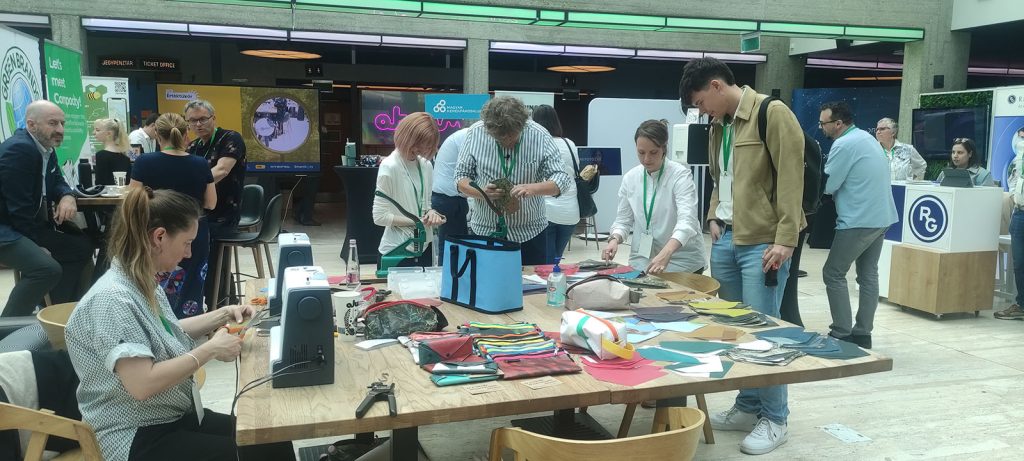
A separate section focused on the social (S) pillar, with an emphasis on well-being, the power of inclusive leadership and authentic, value-based communication. A new feature was a live, interactive marketplace where visitors were greeted not by stands but by real solutions and real people: those who not only understand ESG but also put it into practice.
The event offered a well-balanced selection of practical approaches to the diverse topics of ESG. The word “subjective” appears before the report because, given the wide range of topics, those interested will not necessarily highlight the same ideas. This is precisely what made the event so interesting and high-quality, as everyone could find the presentation or discussion that best suited their interests and company profile.
Here are a few thoughts from the conference, without claiming to be exhaustive:
- Climate change and adaptation: The survival of humanity has often depended on how well it can adapt to external conditions. The extinction of the Neanderthals inevitably came up in connection with the presentation. Researchers are still debating the issue, but according to some theories, the Neanderthals were victims of their own success. The question is whether they disappeared because they were unable to adapt or, on the contrary, because the Ice Age forced both modern humans and Neanderthals to travel further and further across Western Eurasia in search of new resources as the climate changed. This led to them meeting and mixing with each other.
One of the main messages of the lecture on this topic was that our infrastructure was not built for this climate and that human adaptation has biophysical limits. Innovation could be one solution to climate change.
- Ethics and competence: According to the Edelman Trust Barometer global survey (conducted in nearly 30 countries), mistrust is a fundamental sentiment in society today, leading, among other things, to a decline in fundamental trust in democracies and an increase in demands for climate action and corporate social responsibility. Companies have moved up the ethical ladder. Governments and the media, on the other hand, are perceived as unethical and incompetent. The trust index measures the average percentage of people who trust companies, governments, civil society organisations and the media on a nine-point scale.
https://transtelex.ro/kozelet/2025/02/04/bizalom-index-politikai-elit-kiut
- Competitiveness versus sustainability: These two aspects are still competing with each other, although companies with business models based on sustainability are already emerging. One example of a social enterprise is Munch, which has built a business model around saving leftover food from restaurants. Rejoy has entered the market for refurbished smartphones and is already a significant player.
Misconceptions about ESG:
- it is not a CV for companies and businesses, but rather a statement of intent
- it is not a marketing hobby, but rather risk management.